
Classrooms and activity rooms
A classroom is a high-contact room at low height, which makes it unlike any office space of the same size. Tables, chair backs, cubby fronts, and the wall base carry far more hand contact than the floor does.
Serving Corpus Christi, Texas & surrounding areas
Mon–Fri 8am–6pm · Sat 9am–2pm
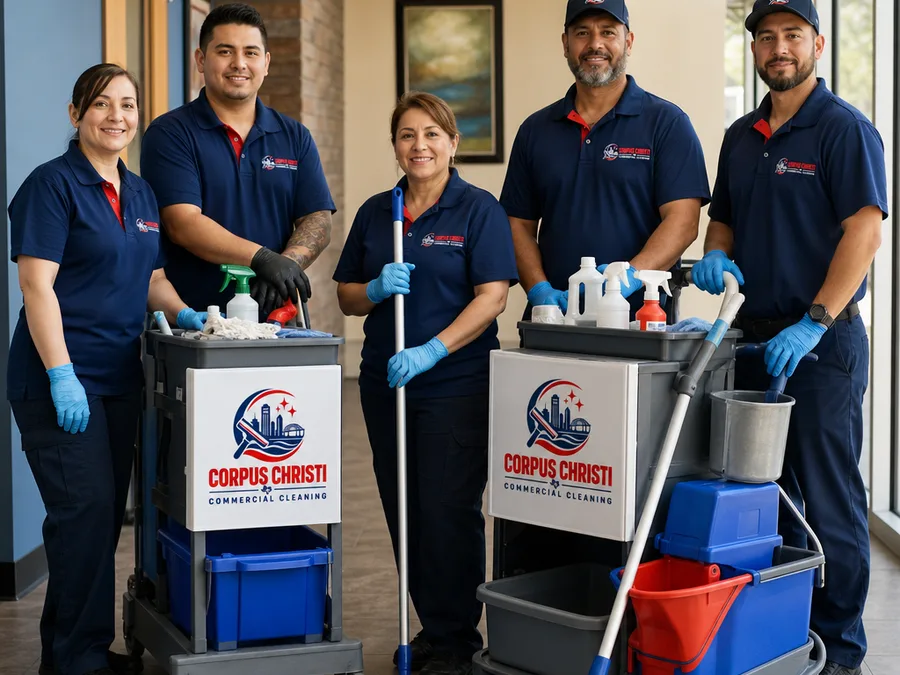
Classrooms, cafeterias, and play areas
Cleaning for Corpus Christi schools and daycare centers, planned around the term calendar and the low surfaces that children put their hands on all day.
A building full of hands
The wear in a school sits low. Door pushes at knee height, chair backs, cubby fronts, table undersides, and the bottom two feet of every wall take contact all day, and a cleaning routine aimed at adult eye level walks straight past most of it.
School and daycare cleaning in Corpus Christi also runs on a calendar that no other building type shares. Term time allows a daily reset and very little beyond it, while breaks open the building up for the work that cannot happen with children present.
Those breaks are when the heavier interval lands. Deep cleaning services covers the periodic reset during a closure, and floor care services takes the gym and cafeteria finish cycles, both of which need an empty building and real drying time.
A daily term-time route
Term-time work is a tight daily route, with the heavier tasks held for the next scheduled break.
Product choice matters more in a building full of children than almost anywhere else. What gets used, where it is stored, and how long a surface stays wet before a room is used again are all set out in the scope rather than left to the crew.
The daily route is deliberately narrow. Work calling for a ladder, a shifted fixture, or a room taken out of use is scheduled into a break, which keeps the term-time visit achievable in the hours it genuinely has.
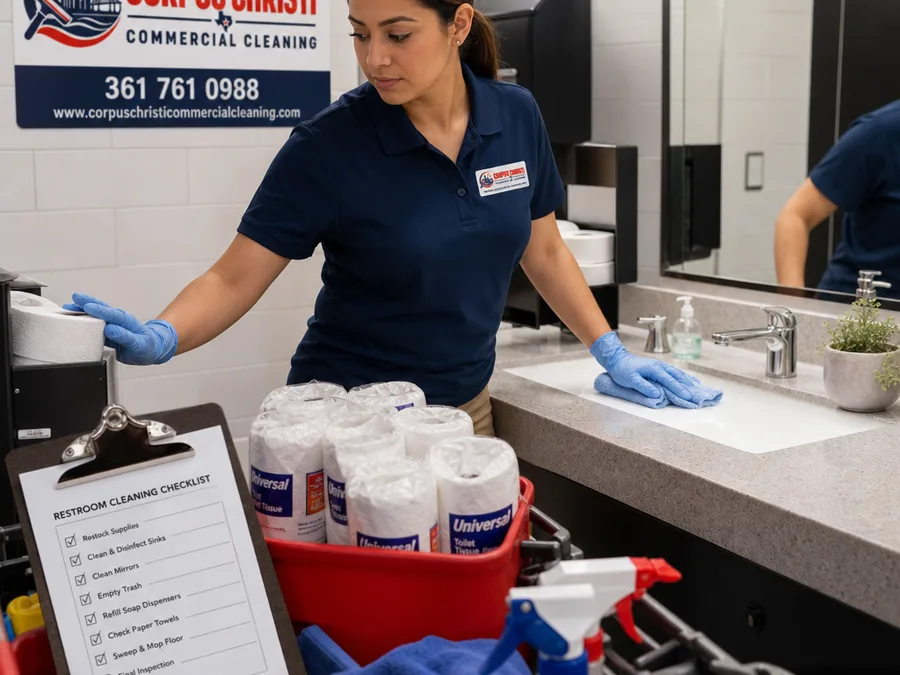
Rooms with distinct demands
Every space below runs on its own clock: a classroom daily, a cafeteria between services, a gym floor on a cycle that has to wait for a break.
Check AvailabilityA classroom is a high-contact room at low height, which makes it unlike any office space of the same size. Tables, chair backs, cubby fronts, and the wall base carry far more hand contact than the floor does.
A cafeteria has to be cleaned between services rather than once after the last tray clears. Table tops, seating, and the floor underneath need turnaround on a schedule set by the lunch periods rather than by closing time.
A gym floor shows every mark and doubles as an assembly space on short notice. Daily dust mopping keeps grit from grinding into the finish, while the finish cycle itself waits for a break in the calendar.
One wing can carry twice the restroom traffic of another depending on where the younger grades sit. Frequency and consumable checks are set per wing instead of averaged across the whole building.
Sand from a play area travels indoors on every pair of shoes and every backpack. Entry matting and a tighter cycle on the first stretch of corridor stop it reaching classrooms and the gym floor.
Illness season
There are weeks each year when a building shares everything, and the surfaces that matter then are not the obvious ones. Door pushes at child height, shared equipment, table undersides, and the wall base beside a row of hooks take repeated contact. A planned seasonal increase on those points beats an instruction to clean more, because it puts hours where contact happens.
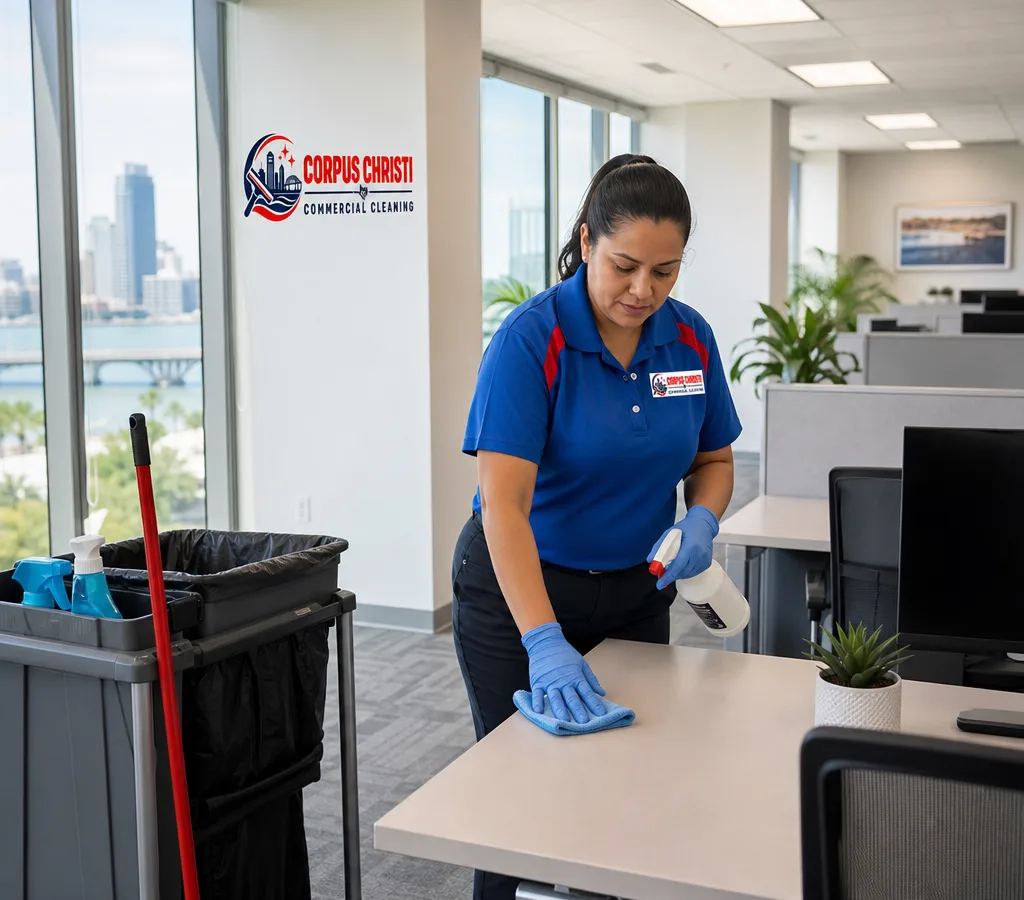
Services a school uses
Term time is held by the daily route, which sits under janitorial services: a timed crew, a fixed order, and consumables checked before a wing runs out mid-morning.
Breaks are when the building opens up. Deep cleaning services covers the periodic reset: vents, the work done at height, and whatever has gathered behind and beneath fixtures while classrooms were occupied.
Hard floors need an empty building and drying time, so floor care services schedules the gym and cafeteria finish cycles into closures rather than trying to fit them around a school day.
Working to the calendar
We walk the building alongside the term dates, because what is possible in week three differs entirely from what is possible over a break. Both scopes get drafted together.
Contact points are recorded at the height children actually use, not at adult eye level. That list becomes the core of the daily classroom route.
What is used, where it is locked, and how long a surface stays wet before a room returns to use are agreed and written down. Nothing here is left to improvisation.
Deep cleaning and floor finish cycles are placed into closures as dated commitments. Scheduling them early is what stops a break passing with the work still outstanding.
Planning your budget
Room count drives this more than total floor area, because a classroom is a stop with its own task list rather than a stretch of open floor. Restroom count per wing and the number of service periods in a cafeteria follow close behind.
The calendar is the other lever. A building wanting a full reset in every break costs differently than one taking a single annual pass, and gym or cafeteria floor cycles are scoped against those closures rather than the term weeks.
What administrators ask
Administrators ask about children, products and the calendar. What happens during the day, what waits for a break, and what gets used in an occupied room.
The daily route is normally worked after dismissal, with a limited presence during the day for restrooms, cafeteria turnaround, and spills. Anything involving equipment, wet flooring, or products that need a room left empty is kept outside school hours or moved into a break entirely.
The work a school day has no room for. That means the periodic reset through deep cleaning, high dusting and vents, the build-up behind and beneath fixtures, and the floor finish cycles in gyms and cafeterias that need an empty building and proper drying time. Break work is booked in advance as dated commitments.
By mapping them at child height rather than adult height. Door pushes low on the frame, chair backs, cubby fronts, table undersides, and the bottom stretch of wall beside a row of hooks take the real contact, and those specific points form the backbone of the daily classroom route rather than being covered by a general wipe-down.
Yes, as a planned seasonal change to specific touch points instead of a vague instruction to do more. The crew gets additional hours aimed at shared equipment and low contact surfaces for those weeks, then the schedule returns to the baseline, which is more effective than spreading the same hours thinner across the whole building.
It does, and in Corpus Christi more than most places. Sand travels in on shoes and backpacks, then acts as an abrasive on gym and cafeteria finishes, which shortens the interval between refinishing cycles. Entry matting and a tighter cycle on the first corridor stretch cost far less than bringing a floor back early.
What gets used, where it is stored, and how long a surface needs before a room is reoccupied are all written into the scope and agreed with you rather than decided on site. If your building requires particular products or excludes others, that is documented per room so the crew applies the right one in the right place.
Send us your term dates and the wings that carry the most traffic. We will write the daily route and the break work as two scopes, then book the closures in advance.
Request a quote
Send the details and we will follow up to arrange a walkthrough and put a written scope together.
Other buildings we clean
A school runs on a calendar almost no other building shares. The pages below each start from the constraint that shapes that building type instead.