
Shared kitchens and break areas
Nothing generates complaints faster than a shared sink. A kitchen on a busy floor needs attention more often than the desks around it, and the appliance exteriors and tables matter as much as the counter does.
Serving Corpus Christi, Texas & surrounding areas
Mon–Fri 8am–6pm · Sat 9am–2pm
Workplaces and professional suites
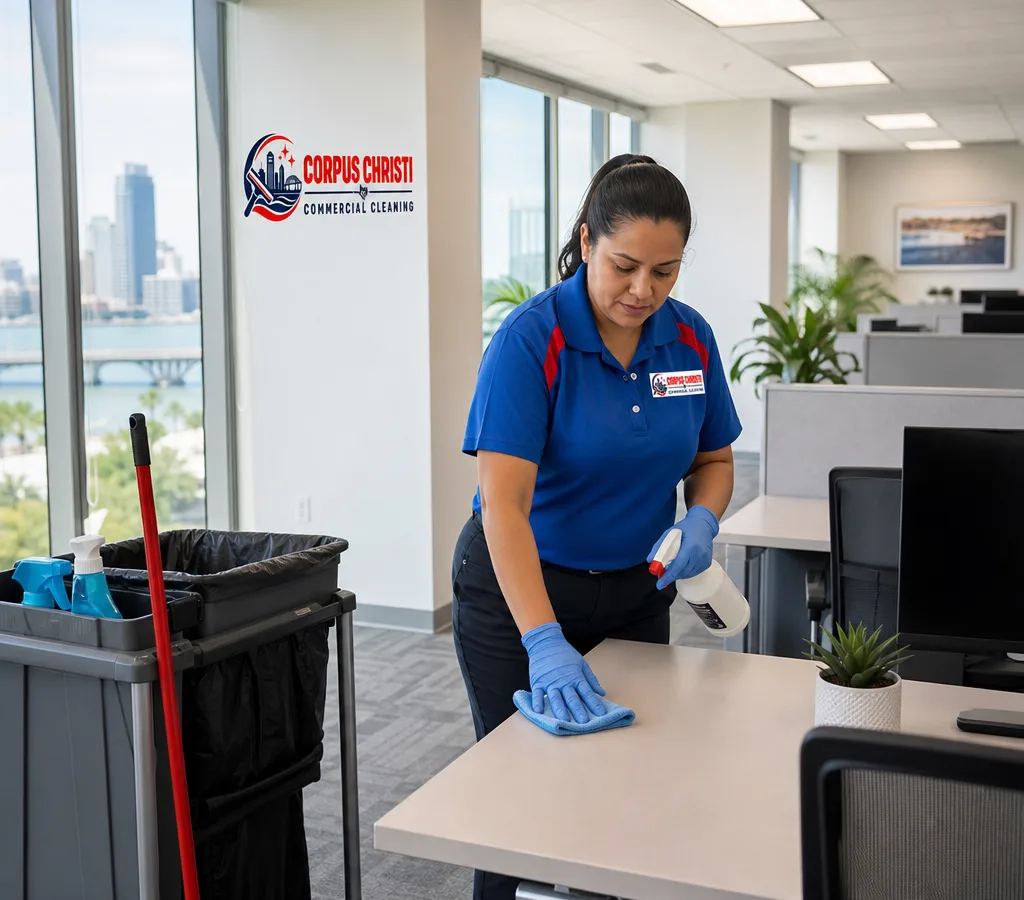
Cleaning for Corpus Christi offices and professional suites, planned around the days your floor is genuinely full rather than around a flat weekly assumption.
The week is not flat
Tuesday the floor is full, every meeting room has been used twice, and the kitchen sink has dishes in it by mid-morning. Friday barely half the desks are touched. A cleaning schedule built on an even five-day week over-serves the quiet end and falls behind on the busy one.
Office cleaning in Corpus Christi now has to follow occupancy rather than square footage. Where people actually sit, which meeting rooms get booked, and how the hybrid week stacks up all matter more to the result than the floor plan on its own ever did.
Coverage is the other half of it. A nightly route under janitorial services handles the whole floor once people have gone, while daytime attention to a kitchen or a restroom on the heaviest days is what keeps the busy end of the week from showing.
A standard office route
Offices vary less than most building types, so the scope is fairly consistent and the frequency is where the thinking goes.
Desk policy needs deciding before the first visit rather than after a complaint. Some offices want surfaces cleaned only when clear, others want desks left entirely alone, and either is workable once it is written down and the crew knows it.
Frequency is set per area and not per building. Restrooms and the kitchen usually need every visit, while private offices and rarely booked meeting rooms hold up on a lighter cycle without anyone noticing a difference.

Where an office actually fails
Some rooms set the frequency for a whole floor and others barely move it. The five below run from the heaviest demand down to the lightest.
Check AvailabilityNothing generates complaints faster than a shared sink. A kitchen on a busy floor needs attention more often than the desks around it, and the appliance exteriors and tables matter as much as the counter does.
A room used four times in a day looks used, and the next booking notices. Table tops, chair seats, and the glass on partitions carry the evidence, so heavily booked rooms sit on their own frequency.
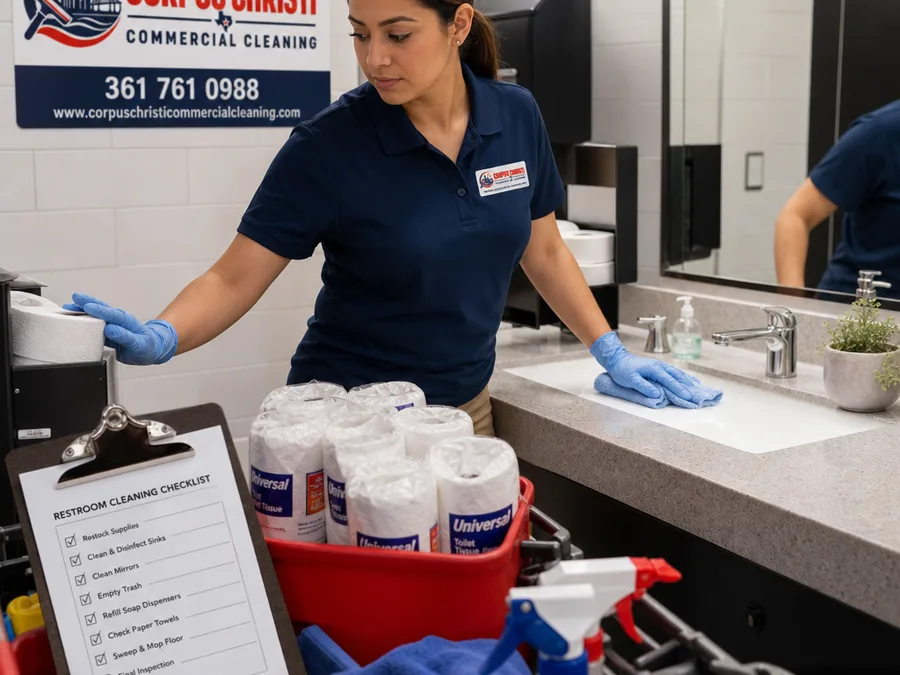
Restroom load follows people rather than floor area, which is why two identical buildings need different schedules. Consumable levels on the heaviest day decide the frequency, not an average taken across the week.
Reception is the one area where a visitor forms a view before anyone speaks to them. Entry glass films over quickly in coastal air, and sandy tracking reaches well past the mat on a windy week.
Rooms used by one person each day do not need what an open floor needs. Putting them on a lighter cycle frees hours for the areas where the week genuinely concentrates.
Occupancy and consumables
A hybrid office has a shape, and it is usually visible in the consumables. Towel and tissue use climbs on the busiest two or three days and drops off sharply, which is a better guide to the schedule than headcount on paper. Reading that pattern lets restrooms and the kitchen get served against real peaks while the rest of the floor stays on a steadier, lighter cycle.
How office work is covered
The staffing side of this is janitorial services: the nightly route, the timed crew, and day porter hours where a kitchen or lobby cannot wait for the building to empty.
Carpet and hard floors run on their own cycles regardless of occupancy. Floor care services handles extraction and the finish work, and the walk-off matting that keeps sandy tracking from reaching the carpet behind reception.
Anything above the eye line runs on a separate interval. Deep cleaning services reaches vents, partition tops, and whatever has gathered behind a cabinet or under a credenza since the last pass.
Setting up a floor
We walk the space and ask which days it fills, which rooms get booked, and where people actually eat. That conversation shapes the frequency more than the square footage does.
Whether desks are cleaned when clear or left alone entirely gets decided up front and written into the scope. Ambiguity here is the single most common source of office complaints.
High-use areas go on every visit and lighter rooms move to a longer cycle. The hours saved on quiet space get spent where the week concentrates instead.
Consumable use and the shift logs show whether the assumed peaks were the real ones. Frequencies move once there is evidence rather than staying fixed on a guess.
Planning your budget
Square footage sets the starting point and visit frequency moves it most. Restroom count, how many separate suites the route has to reach, and whether any daytime porter hours are wanted all push it from there.
Occupancy matters more than it used to. A floor that fills hard on two days needs restroom and kitchen attention closer to a full schedule than a half-empty building suggests, and the plan reflects that rather than averaging it away.
What office managers ask
Desks and frequency are the two things an office wants pinned down first. Both are decisions for you to make, and both belong in the written scope.
That is yours to decide and it goes in the scope. The common arrangement is that clear surfaces get cleaned and anything with papers or personal items on it is left untouched, which avoids both the complaint about dust and the complaint about things being moved. Some offices prefer desks excluded altogether.
It depends on which days the floor fills rather than how large it is. A hybrid office with a heavy midweek peak often needs restrooms and the kitchen served close to daily while desks and private offices hold up on fewer visits, so the schedule is usually staggered by area rather than set as one building-wide frequency.
It can, though most offices prefer the route to run once the floor empties. Daytime work suits restrooms, kitchens, and entry areas on the busiest days, and anything noisy or disruptive is kept to the after-hours visit so nobody is cleaning around an occupied desk.
Mainly at the entrances and the glass. Entry doors and reception glass haze faster here than they would further inland because of salt in the air, and windblown sand reaches past the mat on a gusty week. Those two areas usually sit on every visit even when the interior is on a lighter cycle.
Either arrangement is workable, and the agreement names which one applies to your building. Where the stock is yours, levels get reported while there is still time to reorder. Where it is ours, we hold it and track usage against the days the floor genuinely fills, since a hybrid week consumes unevenly.
The frequency changes with it, which is why the scope is written per area. Adding a floor, a shift, or a few heavy days a week alters restroom and kitchen load first, and those lines get revised in writing before the crew is expected to absorb the extra work.
Tell us which days your floor fills and how the meeting rooms get used. We will walk it, stagger the frequencies by area, and put the desk policy in writing.
Request a quote
Send the details and we will follow up to arrange a walkthrough and put a written scope together.
More facility types
An office is among the more predictable buildings to clean. These others each bring a constraint an office does not have, from trading hours to a term calendar.