
Nightly after-hours crew
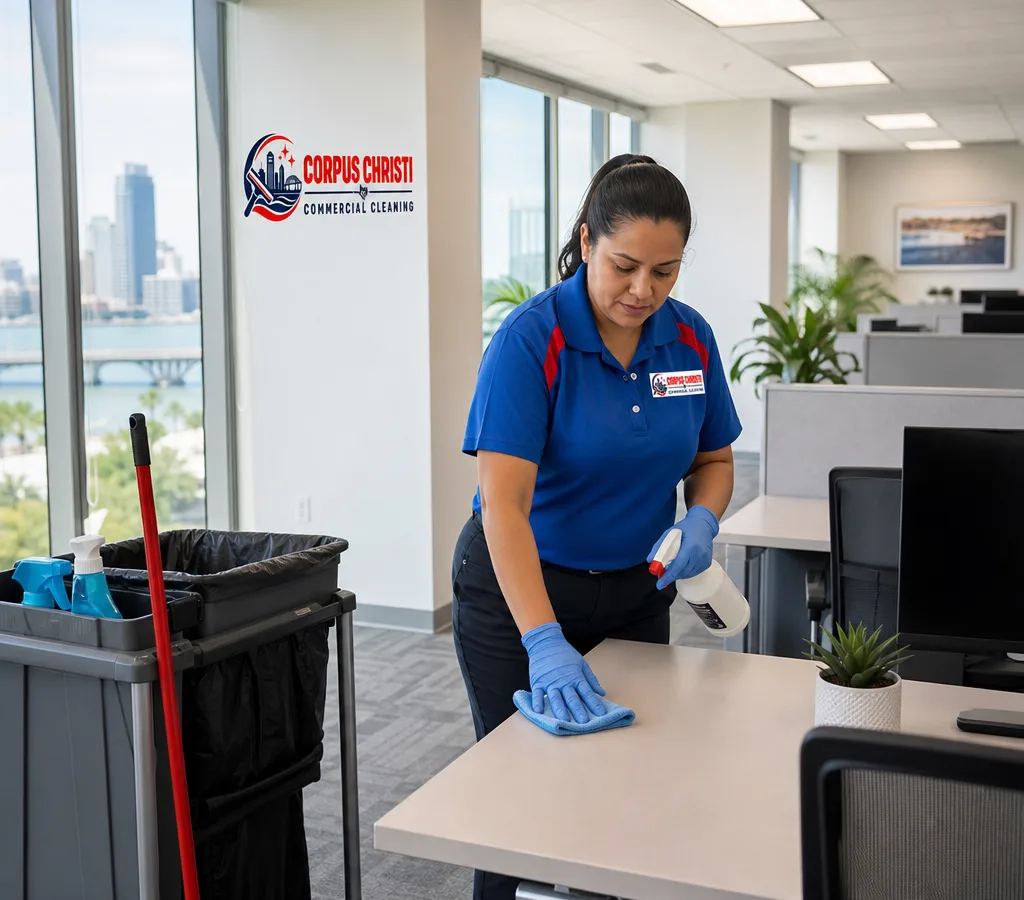
Most offices run best on a crew that arrives once the last person has left. The full route fits inside one uninterrupted window, and nobody is working around occupied desks or a meeting that overran.
Serving Corpus Christi, Texas & surrounding areas
Mon–Fri 8am–6pm · Sat 9am–2pm
Nightly crews and day porters
Staffed cleaning for Corpus Christi facilities: a named routine for every shift, consumables restocked before they run out, and cover arranged when somebody calls in.
The shift, not the task list
By Friday afternoon the restrooms are out of paper towels and the bin beside the breakroom microwave is above the rim. Nothing in the building is broken: the shift simply ran out of time on Thursday and nobody was assigned to catch up on it.
Janitorial services in Corpus Christi are a staffing question before they are a cleaning question. How many hours the shift has, what order the routine runs in, and who decides what gets dropped when the clock runs short all determine what the building looks like in the morning.
The routine has a boundary, and it helps when that boundary is written down. Anything on an interval longer than a week, from vent detail to behind-the-fixture work, belongs to deep cleaning services instead of the nightly shift, which keeps the crew from being blamed for work they were never given hours for.
Inside the routine
A staffed shift is a route with a fixed number of hours. These are the stops it is built from.
Cover is the part most agreements leave vague. When a crew member is out, either the route is covered by somebody already trained on your building, or the agreement says plainly which tasks slip that night.
Supervision is a separate line from cleaning. Someone senior walks the building on a stated interval, reads the shift logs, and retrains against the route when a task keeps showing up as missed.

Shapes a shift can take
Staffing is the real choice here, not the task list. Each pattern below suits a different building, and plenty of sites end up combining two of them.
Check AvailabilityMost offices run best on a crew that arrives once the last person has left. The full route fits inside one uninterrupted window, and nobody is working around occupied desks or a meeting that overran.
Some buildings would rather open clean than close clean. An early crew finishes before the first arrival, which suits clinics and anywhere the evening is still busy with appointments running late.
A high-traffic lobby cannot wait until night, and neither can a restroom that empties by lunchtime. Porter hours put somebody on site through the day to restock, pull trash, and deal with the wet entry mats Gulf humidity leaves behind.
A facility with both administrative and operational space rarely wants one crew covering both. Separate assignments stop the office route being delayed by a plant area that is waiting on a production break.
Not every building needs five nights of coverage. Two or three staffed nights plus a weekend pass carries plenty of small offices, provided the route is written so the gap days are accounted for.
Why crews churn
The common complaint about janitorial work is rarely quality on any single night: it is that the crew changed and the new people were never told what the building expects. A written route and a shift log mean a replacement starts from the same instructions rather than from guesswork, and a supervisor can tell inside one walk whether the route is being followed.
Where the shift stops
The nightly routine is the baseline everything else gets measured against. Work that needs machinery, drying time, or an empty building belongs on another schedule, and that handoff is written into both scopes.
Periodic work is planned around the crew rather than piled on top of it. A strip and refinish night means the route is shortened and the sequence agreed beforehand, so nobody is mopping behind a machine.
Reporting runs through the same log either way. When the crew notices something outside their scope, it reaches your contact as a note rather than being quietly attempted by whoever spotted it.
Standing up a crew
We walk the building the way a crew would work it, room by room and in order. That walk is what tells us whether the hours you have in mind are realistic.
Route order, the tasks at each stop, and the restocking responsibilities all go on paper. Porter hours and the cover arrangement are named in the same document.
The opening nights are worked alongside somebody who knows the plan. Access, alarm steps, and the rooms that are off limits get learned before the crew runs solo.
Supervision reviews what the shift recorded, then walks the building against the route. A repeated miss changes the plan or the training rather than being noted again.
Planning your budget
Staffed cleaning prices on hours before anything else: how many nights a week, how long each shift is, and whether any porter time runs during the day. Building size matters because it sets how many hours the route needs.
Past hours, the drivers are restroom count, how many separate occupied areas the route has to reach, and who buys the consumables. Escorted access or a single-key handover stretches every shift, so it shows in the number.
Crew and schedule questions
Hours, cover and proof are what these answers deal with: how long a shift runs, who turns up when somebody is away, and how you know the route was followed.
A nightly crew works the whole route after the building empties and is judged on the condition it opens in. A day porter works while the building is occupied and handles what cannot wait: restocking, entry mats, breakroom trash, and spills. Plenty of buildings use both, with the porter covering the hours that would otherwise wreck a morning clean.
The crew does, as part of the shift, but who buys the stock is a separate question and is stated in the agreement. If you buy it, the shift log reports when a product is running low so an order goes in before a dispenser is empty. If supply is included, the crew carries and stores it.
Either a trained substitute covers the route, or the agreement states which tasks slip for that night and get picked up the next one. Both are honest answers. What causes trouble is a silent short shift, where the building is left to work out for itself what was missed.
It changes the order and the pace. Entry mats hold moisture far longer here, so they are lifted and the area underneath handled early in the route instead of at the end, and restroom consumables run down faster because hands get dried more often. Humid months often justify porter hours that cooler months do not.
Yes, and in Corpus Christi that often means working around something other than an office day. Retail near the island route stays busy late, clinics run appointments into the evening, and facilities on shift work never fully empty, so the route is built for the quietest window each building genuinely has.
The shift log records it, and a supervisor walk checks the building against the written route rather than against a general impression. When a stop is marked complete and the building disagrees, that becomes a training and route conversation instead of a dispute over what was promised.
Tell us the hours your building is empty, the areas that have to be covered, and where things currently fall apart. We will time the route and put the shift in writing.
Request a quote
Send the details and we will follow up to arrange a walkthrough and put a written scope together.