
Multi-tenant office buildings
Common areas carry every tenant's foot traffic and none of their attention. A building-wide scope settles who cleans the lobby, the elevator landings on each floor, and the restrooms nobody counts as theirs.
Serving Corpus Christi, Texas & surrounding areas
Mon–Fri 8am–6pm · Sat 9am–2pm
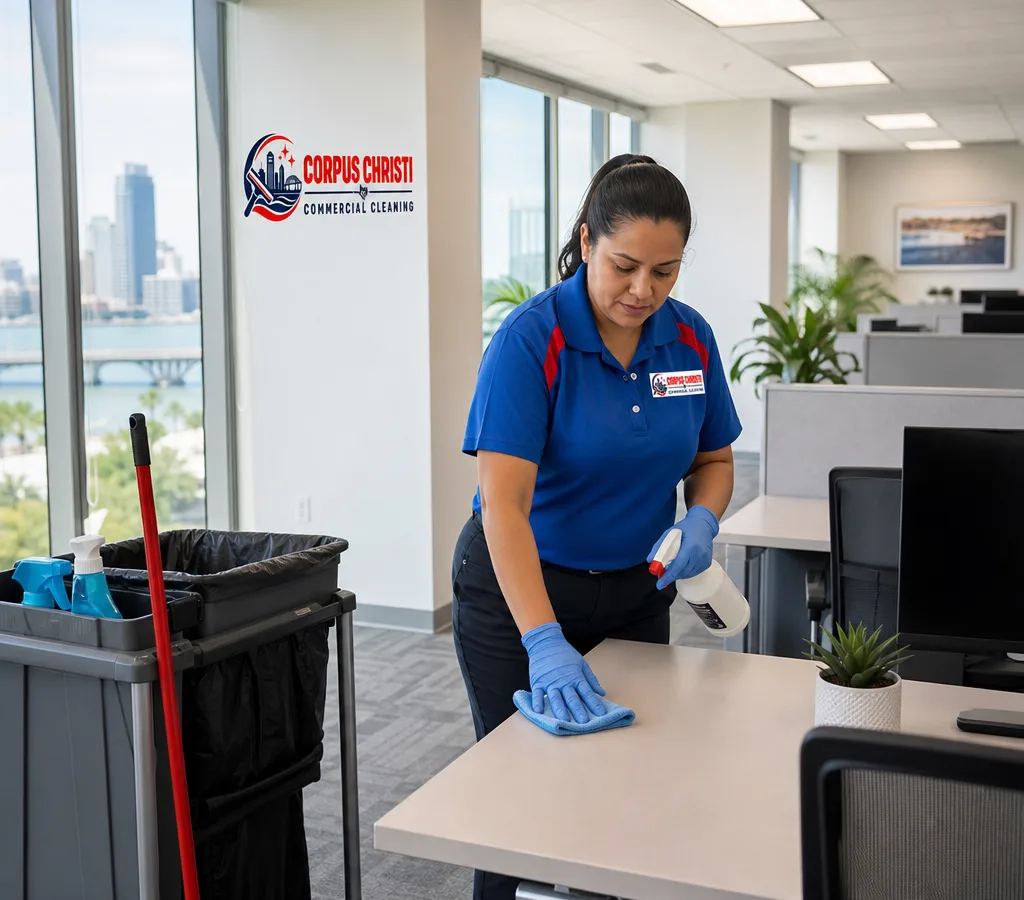
Building-wide contracts in Corpus Christi
Recurring cleaning for offices, retail, medical buildings, and multi-tenant properties, written up area by area so every visit is measured against the same list.
Scope before schedule
Most buildings do not have a cleaning problem so much as a scope problem. Nobody can say whether the stairwell glass is weekly or monthly, so it gets done when someone complains, and the facility manager ends up inspecting work they already pay for.
Commercial cleaning services in Corpus Christi work when the building is broken into areas first: entries, restrooms, offices, corridors, breakrooms, and whatever the tenants share. Each area then gets its own task list and its own frequency, in writing.
Breadth is what a hub agreement buys. One contract can carry nightly janitorial services, a periodic deep cleaning pass, and the floor care cycle each surface needs, so access, keys, and supply responsibility are settled once instead of three separate times.
Defined area by area
Inclusions vary by building, but a commercial program is usually built from these pieces.
What is excluded matters as much as what is included. Items like exterior pressure washing, upholstery, or anything behind a locked plant door are named as out of scope, so there is no argument about them later.
Scope changes go in writing too. When a suite turns over or a tenant adds an evening shift, the task list and the frequency are both updated before the crew is asked to absorb the extra work.

Who this suits
A recurring agreement suits some buildings more than others. These five come up most often, and what each needs written into a scope is different.
Check AvailabilityCommon areas carry every tenant's foot traffic and none of their attention. A building-wide scope settles who cleans the lobby, the elevator landings on each floor, and the restrooms nobody counts as theirs.
Visitors judge a waiting area before anyone speaks to them. Service is scheduled around appointment blocks, which means reception and treatment space get reset outside the hours patients are in them.
Sandy entry tracking reaches a sales floor within a few steps of the door. Retail scopes front-load entries, glass, and the first stretch of walkway, then cover back-of-house on a lighter cycle.
An office bolted onto a working facility collects dust the office alone would never produce. Splitting the scope keeps administrative space on an office cycle while the plant side follows industrial cleaning services.
Several buildings mean several scopes, several access rules, and one person fielding the complaints. A single agreement across the portfolio keeps the reporting consistent, so comparing one building against another is straightforward.
The part that gets skipped
Gulf humidity and salt-laden air change how often the same task has to happen here. Entry glass hazes faster than it would inland, door hardware films over, and mats stay damp long enough to matter. A scope copied from a dry-climate template will under-serve the entries and over-serve the interior offices, so frequency is set per area after the walkthrough.
How the pieces fit
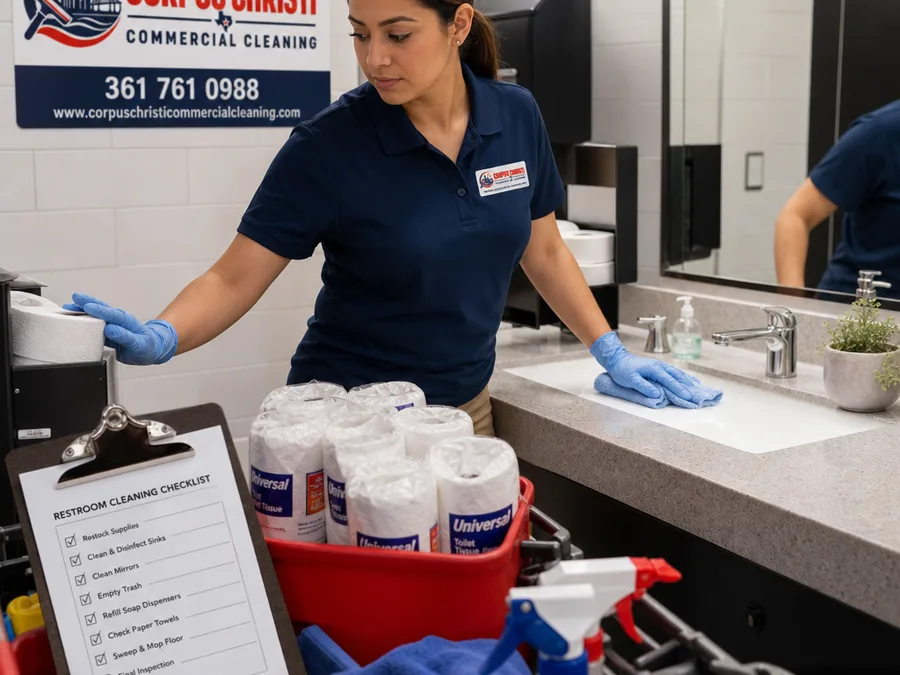
A hub agreement is the frame, and the specialist work hangs off it. Nightly coverage, surface cycles, and periodic detail all reference the same area map, so no task can be assumed by two crews or missed by both.
Sequencing matters more than people expect. High dusting and floor work both put particles into the air, so glass and horizontal surfaces are finished after them rather than before.
One contact holds the whole program. Requests, exclusions, and schedule changes are logged against the agreement instead of being handed to whichever crew happens to be on site.
Getting a program started
We cover every area you want included, plus the ones you are unsure about. Access points, alarm steps, and anything off limits get noted at the same time.
Each area gets its task list and its frequency, with the exclusions listed beside them. You review the document before anybody is scheduled to work.
Crews work from the same document you approved, not from a verbal summary. The opening weeks establish a baseline in the areas that had fallen behind.
Quality walks compare the building to the scope rather than to an impression. Findings and any suggested change of frequency go to your contact in writing.
Planning your budget
Price follows square footage first, then how many times a week the building is serviced. Restroom count, floor types, and the number of separate suites move it as well, because each one adds its own task list.
Condition at the start matters too. A building that has been under-cleaned needs catch-up work before a routine cycle will hold, and access rules such as escorted entry add time to every single visit.
Common questions
Where this service ends and a more specific one begins is the usual starting point. The answers below also cover frequency, access, and who buys the supplies.
Commercial cleaning is the whole agreement: every area of the building, the frequencies attached to them, and the specialist cycles that sit inside it. Janitorial describes the staffed part of that agreement, meaning the nightly crew and any day porter hours. One is the contract and the other is the labor model working inside it.
Frequency is set per area rather than per building. Entries and restrooms in a coastal climate usually need attention on every visit, because salt film and tracked-in sand arrive daily, while private offices and interior conference rooms often hold up on a lighter cycle. The walkthrough is where those intervals get decided.
Yes. Evening, early-morning, and weekend windows are all workable, and the choice usually comes down to alarm procedures and who is able to hold keys. Multi-tenant buildings often split it, with common areas after hours and each suite on whatever window its tenant allows.
Either side can. Some buildings prefer to buy their own consumables and have the crew restock them, while others want supply folded into the agreement. Whichever way it goes, the scope states who buys, who stores, and who reports when stock is running low.
Yes, though the office and the operational areas are normally scoped apart. Port and refinery dust loads a facility differently than an office park does, and the production side carries access rules and timing windows an office never needs. Keeping them separate keeps both halves realistic.
The scope is amended rather than stretched. A new tenant, a changed shift pattern, or a suite coming out of vacancy all change the work involved, so the task list and the frequency are rewritten and reviewed before the crew is expected to cover it.
Tell us which areas of the building you want covered and how the place is actually used. We will walk it, write the scope, and set frequencies you can hold us to.
Request a quote
Send the details and we will follow up to arrange a walkthrough and put a written scope together.